



Buying Guide
How to Buy an Air Fryer or Countertop Air-Fryer Oven
This quick guide helps you choose the right air fryer or air-fryer toaster oven by focusing on real features that matter: capacity, cooking style, materials, cleaning, and value. Use these checks to buy faster and with confidence.
What to consider first
Decide how you plan to use the appliance and where it will live. Small personal units work for single meals and reheating. Mid-size 4 to 8 quart units suit couples and weekly meal prep. Larger toaster-oven style units are best for families, multiple racks, pizzas, and whole roasts. Important quick checks before buying:
- Kitchen footprint and clearance: measure counter depth and cabinet space.
- Interior usable capacity: look for stated quarts or ability to fit a 13-inch pizza or a whole chicken.
- Power and heat: higher wattage heats faster but needs a circuit; check the listed wattage if provided.
- Cooking habits: do you want simple air frying, rotisserie, or full oven functions?


Types and who they suit
Know the main categories so you pick the form factor that matches your cooking style:
- Basket air fryers: compact, fast, good for fries and small batches. Best for quick meals and easy storage.
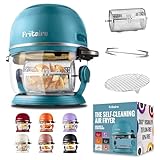
- Glass bowl or glass-encased units: offer full 360 visibility and often include tumblers or rotisserie. Good if you want to watch food and prefer no nonstick coatings.
- Toaster-oven style air fryers: multi-rack, higher max temperatures, and more oven-like functions. Choose these for pizzas, sheet-pan dinners, and baking multiple items at once.
- Pod or power-pod systems with glass containers: very portable and space-saving. Ideal for single-serve cooking and storage-friendly meal prep.
Features and specs to prioritize
Focus on features that affect results and daily use rather than marketing extras. Key features to look for:
- Temperature range and control: wide range (up to 400 to 500F) with small increments gives more precise baking and crisping.
- Convection and fan speed: adjustable fan speeds or turbo convection improves crispiness and even multi-layer cooking.
- Racks and multi-layer cooking: if you need to cook multiple trays, verify rack positions and evenness across layers.
- Thermometer or smart probe: built-in probes remove guesswork when roasting meats.
- Materials and coatings: PFAS-free ceramic or glass interiors reduce chemical exposure concerns. Avoid unknown nonstick coatings if safety is a priority.
- Accessories and cleaning: check for rotisserie skewers, tumblers, air-fry baskets, and dishwasher-safe parts. Self-cleaning glass bowls are rare but handy.
- Controls: intuitive digital controls and a clear display help daily use; lots of presets are nice but ensure manual overrides exist.

Where to buy, mistakes to avoid and expert tips
Decide between online convenience and in-store testing. Online gives more reviews, specs, and often better prices. In-store lets you see size and control layout in person. Before you buy, do these things:
- Check measurements and weight, not just "quart" claims. Look for interior dimensions to ensure your cookware fits.
- Read recent user reviews for reliability and real cleaning experience, not only five-star marketing claims.
- Verify return policy and warranty length; appliances with longer support are safer buys.
- Compare bundled accessories versus separately sold items so you do not overpay.
- Buying a unit that looks big but has limited usable interior space.
- Assuming presets work perfectly for all foods without testing times and temperatures.
- Ignoring cleaning needs; complicated trays and stuck-on grease make daily use a chore.
- Match capacity to typical meal size rather than occasional needs.
- If you roast meats often, choose a model with a probe and a high max temperature.
- Prefer glass or certified PFAS-free coatings if chemical exposure matters to you.
- Look for multi-rack evenness if you plan to cook multiple pans at once.
Final Thoughts
Choose the form factor that fits your kitchen and cooking goals, confirm interior dimensions and cleaning ease, and prioritize safety of materials and useful specs like convection, temperature range, and a meat probe. Buy from a retailer with a clear return policy and warranty so you can test it risk free.


