




Buying Guide
How to Buy a 36V Lithium Golf Cart Battery
This short guide helps you choose a 36V lithium replacement or conversion kit for a golf cart. It covers the must-check specs, the common product types, where to buy, mistakes to avoid, and quick expert tips to get the right battery fast.
Key factors to check before buying
Start with fit and electrical compatibility. Confirm your cart controller voltage and available space, then verify the battery voltage and terminal layout match. Next prioritize performance and safety features that determine day to day use and lifespan.
- Voltage and capacity: 36V (often listed as 36V or 38.4V) and typical capacities of 100 to 105 Ah. Convert to Wh by multiplying volts by amp hours to compare energy.
- Continuous and peak current: Look for continuous BMS rating (150 to 250 A common) and peak current in the hundreds to 1000 A for hill starts and heavy loads.
- BMS and protections: Overcharge, overdischarge, overcurrent, short circuit, temperature cutoffs, and low-temp behavior are essential. Some batteries add self-heating for cold climates or low-temp charge cutoffs.
- Charger specs and charge time: Included chargers are often 20 to 25 A and can fully charge in 4 to 5 hours; confirm compatibility with your cart and charging routine.
- Cycle life and DOD: Expect 4000 to 6000+ cycles for quality LiFePO4 at 80% depth of discharge; longer cycle life reduces total cost of ownership.
- Physical size, weight, and mounting: Measure the battery bay precisely. Many lithium kits are far smaller and lighter than lead-acid but still come in different cases and terminal arrangements.
- Warranty and support: Aim for multi-year warranties and accessible customer support, ideally with a domestic warehouse for faster service.


Types and kits available
Choose the type that fits your needs: a simple drop-in replacement or a full conversion kit with accessories. Categories to consider:
- Direct replacement battery - single-unit swap that replaces a lead-acid pack without rewiring.
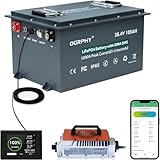
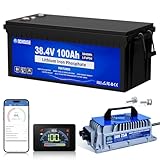
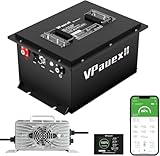
- Conversion kit - battery plus charger, monitor, retention straps, and sometimes a voltage converter for accessories.
- High-discharge performance - higher continuous and peak ratings for steep hills and heavy motors.
- Winterized or heated units - batteries with built-in heating elements or low-temp charging strategies for cold climates.
- Scalable or solar-compatible units - batteries designed to be paralleled for larger energy systems or off-grid applications.
Where to buy and practical buying steps
Online retailers offer the widest selection and detailed spec sheets, but check seller reputation, return policy, and whether the seller has a domestic warehouse. Local dealers and marine or golf cart shops can help verify fit and may offer installation. Follow these steps before purchase:
- Measure your battery bay and photograph terminal locations.
- Record your motor kw rating and controller voltage to estimate required discharge and peak current.
- Confirm whether a charger and monitor are included and whether they match your expected charging schedule.
- Check shipping notes for separate packages and hazardous material delays when batteries ship by air or ground.
- Verify warranty length, what it covers, and how returns are handled for batteries.

Common mistakes to avoid and expert tips
Avoid buying on price alone or assuming physical fit. The most common errors and quick fixes:
- Mistake: Buying the wrong voltage or ignoring peak current needs. Fix: Match voltage exactly and choose BMS continuous and peak ratings that cover your motor and hills.
- Mistake: Not checking dimensions or terminals. Fix: Measure carefully and verify double terminals or terminal type match your cart.
- Mistake: Overlooking cold-weather behavior. Fix: Choose a battery with low-temp protection or built-in heating if you operate below freezing.
- Tip: Prefer kits that include a charger and monitoring screen or Bluetooth app for easy diagnostics.
- Tip: Aim for Grade-A cells and at least 4000 cycles for long life; higher cycle counts justify higher upfront cost.
- Tip: Keep batteries off extreme charge states regularly; store partially charged if not used long term and follow manufacturer charging guidance.
Final Thoughts
Pick a battery that fits your cart physically and electrically, prioritizes a capable BMS and realistic continuous and peak currents, and includes a matching charger and monitor. Measure the bay, confirm warranty and support, and choose a kit tailored to your climate and use pattern for the smoothest upgrade.