



Buying Guide
How to Buy Dog Grooming Brushes
This quick guide helps you pick the right grooming brush for your dog. It covers what to consider, the main brush types, key features to check, where to buy, common mistakes, and short expert tips so you can act fast and confidently.
What to consider before you buy
Know your dog and your goals before shopping.
- Coat type and length: single coat, double coat, curly, woolly, or fine hair — each needs a different tool.
- Primary problem: tangles and mats, heavy shedding, or daily maintenance.
- Dog size and reach: larger heads and longer handles work better for big dogs; smaller heads get into tight spots on small dogs.
- Skin sensitivity: choose softer, angled pins for sensitive skin to reduce scratching.
- How often you will groom: invest in a higher quality tool if you groom weekly; budget tools may be fine for occasional use.
- Budget: expect reasonable options from about $15 up to $50 for professional-grade tools.


Types of brushes and when to use them
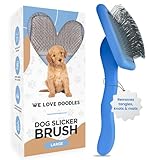
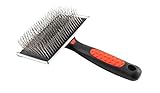
- Slicker brush (long pins): Best for curly or long coats to detangle, remove small mats, and fluff the coat. Look for long, angled pins to reach deeper without scraping skin.
- Detangler with flexible bristles: Designed to glide through tangles with less pulling. Use this first on tight knots and on sensitive areas.
- De-shedding tool (stainless steel edge): Reaches under the topcoat to remove loose undercoat hair. Use during shedding season on breeds with an undercoat. Avoid on tightly curled coats where it can change texture.
- Flat slicker vs curved head: Curved or contoured heads follow body shape and give more control; flat heads cover larger surface quickly.
Key features to look for and where to buy
- Pin length and angle: Longer pins (around 1 inch) and pins angled away from the skin help detangle deeper without scratching.
- Bristle flexibility: Flexible bristles reduce breakage and pulling on hair and skin.
- Material and edge: Stainless steel edges work best for de-shedding; quality pins resist bending.
- Hair-release or easy-clean design: A button or simple cleaning method saves time between sessions.
- Ergonomic handle: Non-slip, comfortable grip and curved backs reduce wrist fatigue during longer sessions.
- Size options: Choose a head size and pin length matched to your dog size and coat density.
- Where to buy: Major online retailers offer wide selection, user reviews, and price comparisons. Local pet stores and groomers let you feel the tool, ask questions, and return faster if it does not fit your dog. Always check return policy and warranty when buying online.
Common mistakes to avoid and quick expert tips
- Do not use a de-shedding blade on a curly coat that should be fluff styled; it can remove texture.
- Never brush aggressively through mats; start with a detangler and work from the ends up to the base.
- Avoid buying solely on price. Extra pins and better construction save time and reduce skin irritation.
- Test pressure on a small area first. If your dog flinches, switch to softer pins or a detangler.
- Combine tools: use a detangler, then a slicker, and finish with a de-shedding tool when needed.
- Clean the brush after each use and replace tools that bend or rust. Look for an easy hair-release feature for faster cleanup.
Final Thoughts
Match the brush to your dog’s coat and your grooming routine. Prioritize pin length and flexibility, an ergonomic handle, and an easy-clean design. If you groom often, invest in a higher quality slicker plus a de-shedding tool; for occasional touch ups choose a detangler plus a midrange slicker. Buy where you can read reviews and return if it does not suit your dog.


