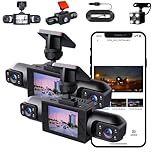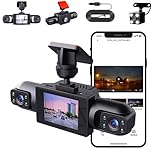
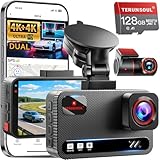


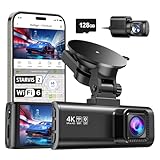

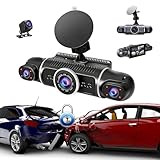

Buying Guide
How to Buy a Front-and-Rear Dash Cam
This short guide helps you pick a front-and-rear dash cam that records clear evidence day and night, protects your vehicle while parked, and is easy to install and use. Use these practical factors and a quick checklist to buy with confidence.
What matters most
Resolution and sensor quality matter more than the highest megapixel number. Choose a 4K front camera if you want crisp license plate detail, paired with at least 1080p rear. Look for a high-sensitivity image sensor and a wide aperture (lower f-number) for better night performance. Wide-angle lenses (around 150 to 170 degrees) increase coverage but avoid extreme fisheye distortion. Key features to prioritize:
- Night performance: high-sensitivity sensor, WDR or HDR for balanced exposure
- Parking protection: supports time-lapse, motion or collision-triggered recording
- Power method: hardwire for continuous parking, or battery/solar for event-only parking
- G-sensor and loop recording to auto-lock incident clips and overwrite old files
- Built-in GPS for speed and route stamps
- Fast WiFi (5GHz) and a reliable app for quick downloads and firmware updates
- Support for large, high-endurance microSD cards (check max capacity and include a quality card)


Types and power choices
Pick a type based on how you drive and how you park. Common setups:
- Single-channel front only: simpler and cheaper, good if you just need forward evidence
- Dual-channel front and rear: standard for full coverage in most cars
- Dual 4K front and rear: highest detail but needs more storage and bitrate
- Battery or solar-assisted units: provide event-only parking protection without wiring, useful for renters or short-term monitoring
- Hardwired units: required for true 24/7 continuous parking recording, best for long-term surveillance
Where to buy and installation notes
Online marketplaces give fast price comparison, user reviews, and frequent bundles that include a memory card. Retail stores let you inspect the build and ask installation questions. When buying, verify:
- Seller reputation, warranty length, and return policy
- Included accessories: microSD card, rear cable, mount, hardwire kit often sold separately
- MicroSD class recommendations: high-endurance, V30 or higher, and format it in the camera after installation
- Mount the camera near the rearview mirror for minimal obstruction
- Route wiring away from airbags and trim; follow vehicle installation warnings
- Use quality cables and original power adapters to avoid power issues
- Keep firmware updated and test video quality in low light before relying on the unit

Common mistakes to avoid and quick buying checklist
Avoid these frequent errors: not checking night performance, expecting continuous parking recording from battery-only units, buying the wrong type of microSD card, and installing where it interferes with airbags. Quick checklist before you buy:
- Does the front camera offer 4K or a good balance of resolution and low-light sensitivity?
- Is the rear camera at least 1080p and wide enough to cover lanes behind you?
- Does the unit support 5GHz WiFi for faster downloads and an easy app experience?
- How is parking mode powered and do you need a hardwire kit?
- Is a high-endurance microSD card included and what max card size is supported?
- What is the warranty length and how is customer support rated?
Final Thoughts
Decide first how much detail you need and how you want parking protection to work. Choose a dual-channel unit with good low-light performance, reliable parking power method, and support for high-endurance storage. Verify the seller, warranty, and included accessories, then format the SD card in the camera and install professionally if you plan to hardwire.