



Buying Guide
How to Buy Flatware Storage and Anti-Tarnish Organizers
This short guide helps you choose storage that protects silver, stainless, and plated flatware. It covers what to consider, the main product types, must-have specifications, where to buy, common mistakes, and expert tips so you can act fast and protect your investment.
Key factors to consider
Capacity and size: count place settings and pieces before you shop. Products range from single-rolls with 12 slots to drawer liners that hold up to about 120 pieces and wooden chests sized around 15" x 11" or 14.7" x 11".
Material and protection: choose between treated anti-tarnish cloth, felt-lined wood boxes, or double sided velvet rolls. Treated cloth that traps sulfur gases offers stronger long term tarnish prevention than plain felt.
Storage style and access: decide if you need a display chest with a lid and compartments, a zippered drawer liner that seals, or portable pouches for travel and gifting.
Durability and finish: look for rigid bottoms to prevent sagging, solid wood construction if you prefer a classic chest, and smooth zippers on soft storage bags.
Material and protection: choose between treated anti-tarnish cloth, felt-lined wood boxes, or double sided velvet rolls. Treated cloth that traps sulfur gases offers stronger long term tarnish prevention than plain felt.
Storage style and access: decide if you need a display chest with a lid and compartments, a zippered drawer liner that seals, or portable pouches for travel and gifting.
Durability and finish: look for rigid bottoms to prevent sagging, solid wood construction if you prefer a classic chest, and smooth zippers on soft storage bags.


Types and when to choose them
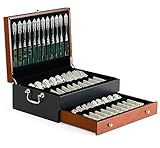
- Wooden flatware chest with felt lining and compartments: best for formal collections and display at home. Good when you want organized slots and a finished look.
- Zippered drawer liners: best for large collections and buffet drawers. They can create an airtight seal and hold many pieces without reorganizing a drawer.
- Anti-tarnish rolls and bags: best for travel, small collections, gift storage, or separating specialty pieces. They are compact and portable.
- Zippered pouches: good for small jewelry and single items that need a tight closure.
Important features, where to buy, and quick checklist
Must-have features:
- Anti-tarnish treated fabric or proven silvercloth rather than plain felt for best protection.
- Proper capacity and internal slots or compartments for knives, forks, spoons, and serving pieces.
- Secure closure: lids, drawers or full zip seals trap tarnish-causing gases.
- Protective interior: soft felt base or plush lining to prevent scratching.
- Extras: included polishing cloths or ribbons are helpful bonuses.
- Buy online to compare measurements, read many reviews, and see detailed photos. Check shipping costs and return policy.
- Buy in store if you want to inspect fit and finish, try zippers, or confirm wood grain and color.
- Always verify internal dimensions and slot sizes against your utensils before buying.
- Measure your drawer or shelf and count pieces.
- Confirm product capacity in pieces or place settings.
- Check that the lining is labeled anti-tarnish or treated for sulfur gases.
- Read return policy and delivery time.

Common mistakes to avoid and expert tips
Common mistakes to avoid:
- Buying by appearance only and ending up with insufficient capacity or wrong dimensions.
- Assuming all felt prevents tarnish. Untreated felt will not stop sulfur related discoloration.
- Overcrowding items, which causes scratches and speeds tarnish.
- Storing silver near rubber, newspaper, or wool which emit tarnish-causing sulfur compounds.
- Clean and fully dry flatware before long term storage and use a polishing cloth periodically.
- Place serving pieces in a separate drawer or deeper compartment to avoid bending or scratching fine pieces.
- If you own a large collection, use a zippered drawer liner for daily use and a wooden chest for seasonal display or special occasion pieces.
- Label boxes or pouches by content to avoid unnecessary handling.
Final Thoughts
Choose storage that matches how you use your flatware: compact rolls or pouches for travel and small sets, zippered liners for large collections and buffet drawers, and felt lined wooden chests for display and organization. Measure first, confirm anti-tarnish treatment, and avoid overcrowding. A small upfront decision protects your flatware and saves time later.


