



Buying Guide
How to Buy Toploader Card Binders
This quick guide helps you pick the right toploader binder for storing trading cards. It covers the key buying factors, the common types, the must-check specs, where to buy, mistakes to avoid, and short expert tips based on current product features and prices.
Key factors to consider
Capacity and growth: choose a size that fits your current collection and allows room to grow. Available capacities in the market range from about 144 up to 432 toploaders.
- Card compatibility: confirm the binder fits rigid toploaders for standard trading cards (roughly 3 by 4 inch protected cards).
- Protection level: look for water resistant covers, padded pages, zipper closures, and archival safe, non-PVC pockets.
- Page style: side-loading pockets hold rigid toploaders more securely than top-loading pockets.
- Portability and display: consider binders with carry ribbons, clear display windows, and spine labels for organization.
- Budget: typical prices range roughly from $20 to $33 for well-built binders with PU leather and non-PVC pages.


Types and capacity options
Pick the category that matches how you use cards.
- Compact top loader folders: lower capacity, very portable, good for casual collectors or travel.
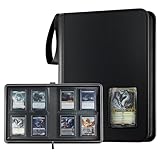
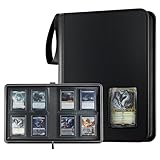
- Large capacity ringless albums: 9 pockets per page, double sided pages, no loose rings, good for large collections and long term storage.
- Padded premium binders: extra rigid covers and padded pages for high value cards and long term protection.
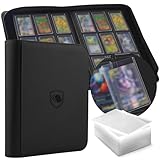
- Value binders with extras: sometimes include a small pack of toploaders or a marker for quick setup.
Important features and specifications to check
Inspect these concrete specs before you buy.
- Pocket size and fit: pocket interior should fit a 3 by 4 inch toploader; some pages list pocket dimensions like about 3.35 by 4.33 inch or 4.5 by 3.3 inch. Confirm compatibility with your toploader thickness (commonly 35PT).
- Material safety: acid free and non-PVC pockets prevent fading and chemical damage.
- Loading style: side-loading pockets keep rigid toploaders from slipping out; ensure snug fit so cards do not move inside the sleeve.
- Closure and cover: a secure zipper and padded or rigid covers reduce dust, moisture, and bend risk.
- Page construction: sewn pages, low friction backing, and double sided pockets give better durability and a framed look.
- Extras: included toploaders, spine label, marker pen, carry ribbon, and warranty add value.

Where to buy, mistakes to avoid and quick expert tips
Online shopping gives wider selection and customer images; local stores let you inspect build and pocket fit in person. When buying online check measurements and customer photos, and read return policy. Common mistakes to avoid:
- Assuming all pockets fit every toploader size. Measure first.
- Buying pockets made with PVC or non-archival materials for long term storage.
- Overstuffing a binder beyond its rated capacity.
- Neglecting zipper or stitching quality which causes spills or page separation.
- Buy a binder with slightly more capacity than you need to avoid frequent upgrades.
- Prefer side-loading, non-PVC pockets and padded covers for long term protection.
- Test-fit one toploader before committing to a large order.
- Store binders upright in a cool, dry place and use a slipcase for extra protection if you stack them.
Final Thoughts
Choose a binder that balances capacity, archival-safe materials, and secure construction. Verify pocket dimensions and loading style, avoid PVC, and pick a model with padding and a quality zipper for the best protection. For most collectors, a 9-pocket, side-loading binder with non-PVC pages offers the best mix of organization and long term safety.


