



Buying Guide
How to Buy Kinetic Recovery Ropes
This quick guide helps you choose the right kinetic recovery rope for off road and vehicle recovery. It covers what matters most, the main types you will see, key specs to compare, where to buy, common mistakes to avoid, and expert buying tips based on real product details.
Key factors to consider
Vehicle weight and use
- Match rope strength to the heaviest vehicle you may recover. Look for a safe margin above gross vehicle weight rather than matching it exactly.
- Consider how often and where you will use it: sand, snow and mud demand kinetic recovery over rigid towing gear.
- Common diameters are about 7/8 inch and 1 inch. Thicker ropes have higher breaking strength and handle heavier loads.
- Length options commonly include 20 ft for tight trails and 30 ft for open spaces. Shorter ropes are easier to manage in dense terrain.
- These ropes stretch to store kinetic energy. Ensure the rope you pick is specifically rated for snatch recoveries rather than towing.
- Double braid nylon cores with a protective polymeric or rubber coating extend life by resisting UV, water and abrasion.
- Check that the rope eyes are reinforced or dipped to reduce wear where shackles attach.
- Recovery kits that include soft shackles and a storage bag offer better immediate value and safer attachment options.
- Look for published maximum breaking strength (MBS) numbers. Example ranges you will see: roughly 28,000 to 34,000 lb depending on diameter.


Types and important specs
Main product types
- Single rope: just the kinetic rope. Buy this if you already have rated soft shackles and storage.
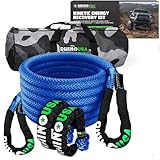
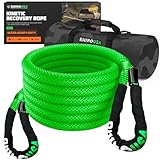
- Recovery kit: rope plus soft shackles and a storage bag. Good for first time buyers or building a compact recovery kit.
- Diameter: 7/8 inch for lighter rigs, 1 inch for heavier trucks and full size SUVs.
- Length: 20 ft for tight trails, 30 ft for general use.
- Construction: double braid nylon is standard for energy storage. A polymer coating or dipped eyes improves longevity.
- MBS: choose a rope with MBS noticeably higher than the vehicle weight. Kits often list MBS between 28,000 and 34,000 lb.
- Included hardware: soft shackles rated to match the rope are preferable to metal shackles for safety and to protect recovery points.
Where to buy and common mistakes
Where to buy
- Online marketplaces give wide selection, clear spec comparisons and customer reviews. Expect price variations; some listings include free shipping or promotional discounts.
- Local off road and auto shops let you inspect the rope, ask questions and get immediate pickup. You can verify eye finishing and coating quality in person.
- Do not use kinetic ropes for routine towing. They are designed for recoveries where stored energy helps get a stuck vehicle moving.
- Never attach a kinetic rope to a trailer hitch ball. Use rated recovery points or a hitch shackle rated for dynamic loads.
- Do not skip soft shackles or use undersized shackles. Metal hooks and unprotected attachments increase risk of failure.
- Failing to inspect or store the rope properly. Dry and clean the rope after use and store in the provided bag away from chemicals and heat.

Expert tips and quick recommendations
Buy by scenario
- If you run ATVs or light UTVs pick a 7/8 inch rope and 20 to 30 ft length depending on trails.
- If you recover trucks, full size SUVs or tractors choose a 1 inch rope with higher MBS and a 30 ft length for flexibility.
- Always use rated recovery points and soft shackles. Inspect eyes and coatings before each use.
- Use a recovery damper or heavy blanket over the center of the rope in case of failure to reduce energy if a line parts.
- Practice a proper snatch: a moving start from the recovery vehicle, controlled throttle, and clear communication between helpers.
- Recovery kits that include soft shackles and a storage bag often save money and give a safer, ready-to-use package.
- Expect price range roughly from mid hundreds down to low hundreds depending on diameter, included hardware, and coatings. Balance cost against MBS and included safety gear.
Final Thoughts
Choose a rope sized to your heaviest recovery scenario, prefer double braid nylon with protective coating, and buy a kit that includes rated soft shackles and a storage bag when possible. Inspect before use, never attach to a tow ball, and practice safe snatch technique to keep people and vehicles safe.


