



Buying Guide
How to Buy a Greenhouse or Portable Space Heater
This short guide helps you choose a portable heater for greenhouses, grow tents, garages, patios, or small rooms. It focuses on practical buying factors, types available, must-have specs, where to buy, common pitfalls, and quick expert tips so you can act fast and confidently.
What to Consider Before You Buy
Match heater capacity to the space and use.
- Coverage: Most compact electric PTC heaters rated 1500W cover roughly 120 to 160 sq ft in a sheltered space. For grow tents or small greenhouses use 1500W as the baseline.
- Power and circuits: 1500W is common and draws about 12 to 13 amps. Avoid running other high‑draw devices on the same circuit.
- Temperature control: An adjustable thermostat or probe is critical to maintain stable plant temperatures and avoid overheating.
- Safety features: Look for overheat protection, tip‑over shutoff, and recognized safety certification (ETL or UL). These are non negotiable for unattended plant rooms.
- Placement and portability: Check cord length, handle or weight, tilt adjustment, and whether the unit can sit safely on shelves or floors.
- Remote monitoring needs: If you want alerts, scheduling, or offsite control pick a model with WiFi/app and temperature alerts.


Types and How They Differ
Know the common categories and when each makes sense.
- Basic plug‑in PTC fan heaters: Fast heat, low cost, simple controls. Good for occasional use and tight budgets.
- Thermostat controlled units: Maintain a set temperature automatically. Best for continuous plant protection and energy savings.
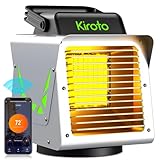
- Smart WiFi/app heaters: Offer remote control, temperature alerts, and scheduling. Ideal when you need offsite monitoring or live alerts for valuable plants.
- Oscillating or swing models: Provide more even heat distribution across benches or several pots. Pick these when uniform coverage is important.
Key Features and Specs to Check
Verify these specs before checkout.
- Wattage and coverage: 1500W for up to ~150 sq ft. Some models offer 750W low setting for lower energy use.
- Thermostat range and probe type: Look for a wide range (about 40 to 113 F) and an external probe if possible for accurate ambient readings.
- Heating tech and warmup time: PTC ceramic elements heat quickly (some claim 1 to 3 seconds). Faster warmup helps protect plants on cold mornings.
- Safety certifications and protections: ETL or UL listed, overheat cutoff, tip‑over shutoff, and automatic reset behavior.
- Controls and connectivity: Manual dial vs digital thermostat, timer, app control, alerts, and scheduling options.
- Physical features: Cord length (6 to 8 ft common), handle, non slip base, tilt adjustment, weight and size for your setup.

Where to Buy, Common Mistakes, and Quick Expert Tips
Online vs retail
- Online: Wider selection, detailed specs, and customer reviews. Confirm return policy and shipping time if you need it before a cold snap.
- Retail: See the unit in person and check build quality. Limited selection for specialized models like WiFi heaters.
- Buying based on price alone and skipping safety certification checks.
- Underestimating cord length or placement needs and ending up with awkward setups.
- Using a single heater on an overloaded circuit or leaving high‑power heaters plugged into extension cords not rated for the load.
- If protecting valuable plants or seedlings choose a thermostat or smart model with alerts.
- For basic frost protection a simple PTC unit with a thermostat is usually enough and more energy efficient than oversized solutions.
- Place the external probe near the canopy height, not on the heater, for accurate control.
- Prefer models with multiple heat settings so you can dial back energy use on milder nights.
- Always site the heater on a stable, level surface and clear of combustible materials.
Final Thoughts
Pick a 1500W PTC heater with a good thermostat for reliable year round greenhouse protection. If you need remote monitoring or alerts choose a WiFi model with certifications. Avoid uncertified cheap units and plan placement and circuit load before you buy so your new heater keeps plants safe and energy costs under control.