



Buying Guide
How to Buy Outdoor Enzymatic Pet Odor Eliminators
This short guide helps you pick the right outdoor enzymatic odor eliminator for yards, artificial turf, kennels, patios, and other outdoor surfaces. It focuses on practical buying decisions based on typical product options, packaging, safety, application methods, and common pitfalls.
Key factors to consider
Consider these points before you buy.
- Surface type: Turf, natural grass, gravel, concrete, and wooden decks respond differently. Choose a formula labeled safe for the surface you have.
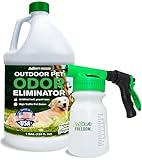
- Area size and packaging: Many products come in 1 gallon bottles; prices range roughly from low 30s to mid 60s per gallon. For large yards or commercial use, look for concentrates or hose-end compatible packaging to save time and money.
- Application method: Hose-end sprayers or heavy-duty sprayers are best for large outdoor areas. Trigger sprayers work for spot treatment.
- Active approach vs masking: Prefer bio-enzymatic formulas that digest odor at the source rather than perfumed maskers. Some formulas add a light scent; if you or your pets are sensitive, choose unscented options.
- Safety: Verify the label for pet, child, and plant safety and look for any third-party or industry certifications if you need carpet or indoor approvals.
- Availability and buying urgency: Popular sizes can sell out quickly. If you depend on regular treatments, check stock levels and consider buying extra or a concentrate.


Types and when to choose them
Main categories and quick advice.
- Ready-to-use gallons with sprayer included - Choose this for fast setup and moderate yard sizes. Good when you want convenience over dilution math.
- Concentrates - Best for large properties or multi-unit facilities. Dilute per instructions to lower cost per treatment.
- Hose-end or hose-compatible formulas - Ideal for broad coverage like lawns and artificial turf because they connect to a hose and save time.
- Multi-purpose commercial enzyme cleaners - Pick these if you need both indoor and outdoor use or clean drains and grease traps in addition to pet odors.
Important features, where to buy, and quick buying tips
Features to check before you add to cart or buy in store:
- Concentration ratio and dilution instructions - ensure you can dilute accurately if buying concentrate.
- Included applicator - a hose-end or rugged sprayer is a big time saver for yards.
- Scent and residue - look for non-residue, paw-safe formulas if pets and children frequent treated areas.
- Reapplication guidance - many enzyme products recommend repeat application every 2 to 4 weeks in typical use.
- Compatibility notes - confirm safe use on plants, artificial turf backing, and concrete.
- Online marketplaces - wide selection, easy price comparison, user reviews, and often bundled bundles. Watch seller ratings and shipping times if stock is low.
- Local retailers - let you inspect packaging and start treatment immediately. Good for urgent needs when online stock is scarce.
- Commercial supply vendors - useful for large-volume needs and may offer better per-gallon pricing.

Common mistakes to avoid and expert tips
Avoid these pitfalls and use these tips to get the best results.
- Do not skip cleaning solids first - remove feces and debris before spraying so enzymes reach the source.
- Do not use harsh chemicals like bleach before enzyme products - they can inactivate enzymes.
- Do not apply in heavy rain - enzymes need time to penetrate; apply after rain for best effect.
- Test a small area for colorfastness if you are concerned about surfaces or turf.
- Expert tip - for large yards, choose a concentrate plus a hose-end applicator to cut cost and treatment time.
- Expert tip - follow label frequency. In high-traffic or multi-pet areas, treat every 2 weeks until odors subside, then maintain monthly.
- Expert tip - keep an extra gallon on hand if listings show limited stock to avoid treatment gaps.
Final Thoughts
For most homeowners, a pet-safe, bio-enzymatic product in a 1 gallon ready-to-use or a concentrate with a hose-end applicator offers the best balance of effectiveness and value. Pick the formulation that matches your surface and area size, test a small spot first, and schedule regular treatments for lasting results.


